My Leadership Philosophy
Leadership Is About Creating the Conditions for People to Thrive.
My approach to leadership didn’t come from a single book or framework. It evolved over more than two decades of successes, mistakes, difficult conversations, rapid growth, distributed teams, acquisitions, and periods of significant change.
These five principles represent what I’ve come to believe about building high-performing engineering organizations where people do meaningful work and deliver extraordinary results.
These aren’t rules I’ve mastered. They’re principles I try to practice every day. Each one has been shaped by experience, mistakes, people I’ve worked with, and ideas I’ve encountered along the way. They are also continuously evolving as I learn and grow myself.
Principle
Elevate People
Great organizations grow when their people grow.
What I Believe
My first responsibility as a leader is to understand the people I lead and help them become more capable, confident, and effective over time. That starts with knowing who they are; their strengths, aspirations, motivations, working styles, and the areas where they still need to grow.
I believe people do their best work when they have a clear sense of purpose, meaningful ownership, room to exercise judgment, and opportunities to build mastery. My role is to create those conditions, set high standards, and believe in people enough to challenge them beyond what they think is possible.
Elevating people also means being present when the work gets hard. Give honest feedback when someone is off track. Encourage them when confidence drops. Recognize and celebrate real progress. Create opportunities for collaboration and contribution. People should know that their leader is invested in their success; but also that growth comes with responsibility and accountability.
If I am doing my job well, people should leave my organization stronger than when they entered it: better at their craft, more confident in their judgment, more prepared to lead others, and proud of what they accomplished together.
How I Put It Into Practice
Understand the Individual
Understand their strengths, motivations, aspirations, working style, and where they want to grow. Ask good questions, listen carefully, and look for opportunities that stretch them in ways that matter.
Coach Before Solving
I ask questions first. My goal is to build judgment and confidence, not dependence. One of the hardest parts of leadership is resisting the urge to step in and solve the problem yourself.
Give Meaningful Ownership
People grow when they own problems that matter and have room to solve them their way. They may solve it differently than you would. Embrace and encourage that. Ensure both autonomy and accountability
Set High Standards
I’m clear about what good looks like and hold myself and others accountable to it. High standards are a form of belief: I challenge people because I know what they’re capable of. People often rise to the expectations placed on them.
Make Progress Visible
Celebrate real progress, reinforce what is working, and help people regain confidence when the work gets difficult. Small wins matter. Recognition helps people see their own growth and build momentum.
Develop Leaders
My impact multiplies through leaders who develop the people they lead. I coach managers to create clarity, delegate meaningful ownership, give direct feedback, and build the judgment and confidence needed to lead at the next level.
From Experience
Some of the best engineers I’ve worked with didn’t start out as engineers.
At Xcira, we partnered with LaunchCode to bring people into technology from very different careers, including former teachers and retail employees; many without traditional computer science backgrounds or college degrees.
We focused on potential: learning what people were good at, giving them meaningful work, coaching them, and challenging them to grow. Not every placement worked out, but several became some of the strongest developers and team members I’ve had the opportunity to lead.
That experience reinforced something I still believe: talent doesn’t always arrive with the expected résumé. A leader’s job is to recognize potential, create opportunity, and help people discover what they’re capable of.
Ideas That Shaped My Thinking
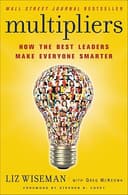
Helped change how I thought about my role as a leader. My job isn't to have all the answers; it's to draw out the intelligence and capability of the people around me, give them room to lead, and help them become better than they thought they could be
View on Amazon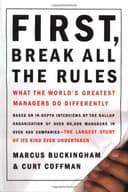 First Break All The Rules
Marcus Buckingham & Curt Coffman
Reinforced that great leadership isn't about treating everyone the same. People have different strengths, motivations, aspirations, and ways of working. My responsibility is to understand those differences, help people build on what they do best, and create opportunities where they can contribute, grow, and succeed.
View on Amazon Dare to Lead
Brené Brown
Reinforced that helping people grow requires both courage and vulnerability. Leaders need to set clear expectations, give honest feedback, admit when they don't have the answer, and create an environment where people can do the same
View on Amazon Self-Determination Theory
Deci & Ryan
Gave me a deeper framework for understanding motivation. People are more likely to thrive when their needs for autonomy, competence, and connection to others are supported. It reinforced my belief that leaders don't create motivation through control; they create conditions where motivation and growth can flourish.
Foundational Research
Something I’ve Learned
People grow when leaders create the conditions for growth.
I've learned that developing people isn't about having all the answers for them. Set clear expectations, give people meaningful ownership, coach before solving, provide honest feedback, and create opportunities that stretch what they believe they can do.
Growth also requires belief. People are more willing to take on difficult challenges when they know someone sees their potential, supports them when they struggle, and will give them the space to learn. The goal isn't dependence on the leader—it's greater confidence, judgment, capability, and autonomy.
The best measure of developing someone is that they need you less over time, not more.
Principle
Build Trust
Trust makes courage and collaboration possible.
What I Believe
Without trust, the vacuum gets filled by fear and self-protection. People become more careful about what they say, less willing to take risks, slower to surface problems, and more likely to protect themselves when something goes wrong. Over time, that stifles innovation, weakens collaboration, erodes morale, and breeds cynicism.
Trust changes that dynamic. When people believe their leaders and teammates are competent, honest, and genuinely invested in one another, they can spend less energy protecting themselves and more energy doing the work. They can disagree, experiment, admit mistakes, ask for help, and challenge one another without questioning whether doing so will be used against them.
I don't see trust as the absence of accountability. The strongest teams I've worked with combine high trust with high standards. People tell each other the truth, make clear commitments, follow through on them, own mistakes, and hold one another accountable because they know everyone is working toward the same outcome. Commitments have to mean something—leaders set that expectation by keeping their own word and consistently following up on what others have agreed to do.
Trustworthiness requires competence and authenticity. Good intentions are not enough; people need confidence in your judgment and need to know they are dealing with the real person—not a managed version of the leader. That means being honest about what you know, what you don’t know, what you believe, and where you’ve made mistakes.
Leaders have to go first. Trust is strengthened through consistency, transparency, vulnerability, and doing what you say you'll do—but it also has to be extended. If I expect people to take ownership, make decisions, and bring me the truth, I have to demonstrate that I trust them enough to do it.
How I Put It Into Practice
Extend Trust First
Don't make people endlessly prove they are worthy of responsibility. Give trust, ownership, and autonomy first, then let their behavior strengthen or weaken that trust.
Make Commitments Matter
Be clear about what we’re committing to, who owns it, and what success looks like. Then follow through. Leaders model this by keeping their word, following up on commitments, and resetting expectations when circumstances change. Trust grows when people know that commitments matter.
Be Vulnerable
Admit mistakes. Say “I don’t know.” Ask for help. Own your part when things go wrong. Leaders who pretend to have every answer teach everyone else to hide uncertainty too.
Tell The Truth
Have the difficult conversation. Surface bad news early. Give honest feedback with respect. Trust doesn't mean avoiding discomfort; it means people believe you will be candid with them rather than talk around them or behind them.
Make Failure Safe
Create room to experiment, take reasonable risks, and make mistakes without fear of humiliation or blame. Learn from failure, own it, and improve the system. Safety doesn’t mean lowering standards.
Stand With Your People
People need to believe that you care about their interests—not just their output. Protect people from unnecessary politics and blame, support them when things get difficult, give credit generously, and take responsibility as their leader.
From Experience
The feedback I most need is often the hardest to give me.
Over the years, people I've led have told me when they thought I made the wrong decision, disagreed with an architecture I supported, or pointed out something I was doing that made their job harder.
Earlier in my career, feedback like that could be difficult. My first instinct might be to defend the decision or take the criticism personally. Over time, I learned that while the reaction may be natural, acting on it is rarely productive.
Now my response is always the same: thank you for trusting me enough to tell me. It doesn't mean I'll always agree, but I never want someone wondering whether it's safe to challenge me.
I've learned that how I respond in those moments matters far beyond that conversation. If I become defensive, I may win the argument—but teach someone not to bring me the truth next time. If I listen, stay curious, and own it when I'm wrong, I make the next honest conversation easier and build a stronger relationship.
Ideas That Shaped My Thinking
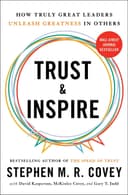 Trust & Inspire
Stephen M. R. Covey
Reinforced that trust has to be extended, not just earned. Leaders demonstrate trust by giving people real responsibility, autonomy, and the freedom to exercise judgment. Trusting people first creates the opportunity for them to rise to that trust.
View on Amazon The Culture Code
Daniel Coyle
Helped me see trust as something built through everyday interactions. Belonging, vulnerability, and repeated signals of safety create an environment where people are willing to speak honestly, take risks, and rely on one another.
View on Amazon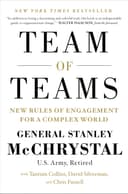 Team of Teams
Gen. Stanley McChrystal
Showed me how trust becomes an organizational advantage. When people share information freely and trust one another to act, decisions can move closer to the work and teams can collaborate without depending on the hierarchy for every answer.
View on Amazon- Trust in a Manager and Its Effect on Subordinate Performance
Mayer, Davis & Schoorman (1995)
Gave me a research-based framework for understanding why we trust people. Trustworthiness is shaped by ability, benevolence, and integrity: whether someone is capable, genuinely cares about others, and behaves according to principles people can rely on.
Foundational Research
Something I’ve Learned
Trust is earned—but someone has to go first.
I used to think trust was something people earned over time. That may be true, but, I've come to believe leadership requires going first. Give people meaningful responsibility, share information openly, assume positive intent, and give them room to exercise judgment.
That doesn't mean trust is unconditional. What happens next either strengthens or weakens it. But if I ask people to trust me while withholding trust from them, I'm creating the very environment of caution and self-protection I'm trying to avoid.
Principle
Connect to Purpose
People commit more fully when they understand why the work matters.
What I Believe
Technology matters because of what it enables. Sometimes the impact is significant and obvious. Other times it is a small improvement that saves someone time, removes frustration, or makes their work easier. Either way, there are real people and real outcomes behind what we build. Part of my job as a leader is to make that impact visible—to connect the work to the people it serves and the business it helps succeed.
I also believe people need a future worth building toward. A compelling direction should help us imagine what could be better and stretch what we think is possible today. It should be ambitious enough to inspire people, but clear enough that everyone understands where we're going and why getting there matters.
Vision without shared context, however, isn't enough. People make better decisions when they understand the customer, the business, the strategy, the constraints, and the tradeoffs behind our direction. I want teams to understand the reasoning, not just receive the decisions. Shared context is what allows alignment and autonomy to coexist.
Ambition also needs a path. Shared goals and OKRs define what success looks like. Roadmaps and milestones give us a way to get there. The path doesn't need to be perfect or fully known upfront—meaningful progress is usually iterative and incremental. We deliver, learn, measure, adjust, and keep moving toward the outcome.
Ultimately, everyone should be able to connect the work in front of them to the larger purpose. Alignment isn't everyone doing the same thing; it's everyone making decisions in service of the same purpose. When people understand why the work matters, where we're going, and how their contribution helps us get there, they can move together without needing every step prescribed for them.
How I Put It Into Practice
Make the Impact Visible
People care more deeply about work when they understand who it helps and why it matters. I connect the work to real people, customer outcomes, and business impact so teams can see the difference their work makes—even when that impact isn't immediately obvious.
Paint an Ambitious Future
People need something worth building toward. I create a clear picture of what could be better and set a direction that stretches what seems possible today, while making sure people understand why reaching it matters.
Create a Shared Context
Distributed teams need a shared frame of reference. I make the customer need, business priorities, constraints, tradeoffs, and reasoning behind decisions visible so people across teams, geographies, and cultures are interpreting the work through the same lens and pulling in the same direction.
Turn Vision Into Goals
Vision becomes actionable when people know what success looks like. I use shared goals and OKRs to translate direction into measurable outcomes, create focus, and make progress visible. Incremental wins build confidence, reinforce progress, and create momentum toward the larger goal.
Build a Path Together
Ambitious goals rarely come with a perfect roadmap. I work with teams to turn the destination into milestones and an adaptable roadmap, then make progress iteratively—deliver, learn, measure, adjust, and keep moving.
Connect Strategy to the Work
Alignment only works when people can connect the larger direction to the decisions they make every day. I continually reinforce priorities, goals, and context so teams understand what matters now, how their work contributes, and where they have the autonomy to make decisions.
From Experience
Big transformations need both a compelling future and a credible path to get there.
At Xcira, we were running on self-hosted infrastructure that required significant capital investments every few years and could not scale elastically when demand changed. Moving to the cloud was a massive shift, and not everyone initially believed it was the right direction.
Before we could execute, we had to create shared understanding around why the change mattered: cost, scalability, resilience, and the limitations of continuing with the existing model. Once we aligned on the destination, we broke the transformation into a step-by-step roadmap that let us modernize incrementally without disrupting the business.
That experience reinforced something I still believe: ambitious change becomes possible when people understand the reason for it, believe in the destination, and can see a practical path from where they are today to where they need to go.
Ideas That Shaped My Thinking
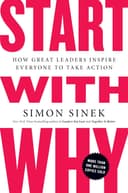 Start with Why
Simon Sinek
Reinforced that people need more than a list of things to do—they need to understand why the work matters. Connecting decisions and priorities to a meaningful purpose creates context, helps people make better choices, and gives them something larger than the task itself to work toward.
View on Amazon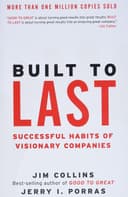 Built to Last
Jim Collins & Jerry Porras
The concept of BHAGs shaped how I think about ambition. A compelling future should stretch beyond what seems easily achievable today, giving people something meaningful to rally around while creating belief that together we can accomplish more than we initially thought possible.
View on Amazon Measure What Matters
John Doerr
Helped shape how I translate ambition into execution. OKRs connect a larger purpose to clear, measurable outcomes, create alignment across teams, and make progress visible without prescribing exactly how people should achieve the goal.
View on Amazon- The Progress Principle
Teresa Amabile & Steven Kramer
Reinforced the importance of making progress visible. Meaningful work becomes more motivating when people can see that their effort is moving something forward. Small wins build confidence and momentum, especially when the larger destination is ambitious and still far away.
Foundational Research
Something I’ve Learned
Ambition needs a Path
I’ve learned that an inspiring vision can create energy, but without a credible path it can just as easily create skepticism. People need to see how today’s work connects to tomorrow’s ambition.
Break the journey into meaningful goals, make progress visible, celebrate the wins along the way, and adjust as you learn. Each step builds confidence and momentum. What once seemed impossible starts to feel achievable.
Principle
Build Great Teams
Great teams amplify talent
What I Believe
The most meaningful work is rarely accomplished by one person. It takes people with different strengths, experiences, perspectives, and expertise working toward something they could not accomplish alone. Individual capability matters, and the tools available to us can expand what one person can accomplish dramatically, but great teams amplify that capability even further.
Putting talented people together doesn't automatically create a great team. The strongest team isn't always the one with the strongest individuals. People need a shared purpose, clear ownership, and confidence that everyone is committed to the same outcome. The strongest teams combine complementary strengths and value people not only for what they contribute individually, but for how they make the people around them better.
Collaboration isn't about involving everyone in everything. It's about bringing together the right perspectives when they matter. Knowledge, experience, and ideas are distributed across people, disciplines, teams, and geographies. When those perspectives combine well, teams generate better ideas, find more creative solutions, challenge assumptions, innovate faster, and accomplish more than individuals working in isolation.
That requires people to contribute what they really think. Great teams aren't teams that always agree. People need to feel safe asking questions, admitting mistakes, offering unconventional ideas, and saying, “I think we're wrong.” Productive disagreement isn't dysfunction. Handled with trust and respect, it protects against groupthink and makes the eventual solution stronger.
I don't believe there is one ideal team structure. Stable, cross-functional teams are powerful when they fit the work, but structure should serve the problem rather than become an end in itself. Teams and their boundaries should be able to evolve as the work changes. Fluid doesn't mean unclear: purpose, ownership, decision-making, and accountability should remain clear while expertise can move across boundaries when needed.
How I Put It Into Practice
Build for Collective Strengths
Individual talent matters, but so does the effect someone has on everyone around them. I look for complementary strengths and for people who are curious, collaborative, growth-oriented, and invested in helping others succeed. The strongest team isn't always the one with the strongest individuals; it's the one where people make the whole stronger.
Amplify Each Other
Real collaboration is more than dividing up work and completing pieces independently. Create opportunities for people to combine expertise, build on one another's ideas, and solve problems together so the team produces better ideas, more creativity, faster learning, and stronger outcomes than anyone could produce alone.
Create Psychological Safety
People contribute more fully when they know they can ask questions, admit mistakes, challenge assumptions, offer unconventional ideas, and say “I think we’re wrong” without fear of embarrassment or retaliation. Safety doesn’t mean comfort or low standards; it creates the conditions for candor, learning, and better performance.
Encourage Productive Dissent
Great teams need different perspectives and healthy disagreement. Actively seek input from people who see the problem differently, debate ideas with curiosity and respect, resist premature consensus and groupthink, then commit together once a decision is made.
Share Ownership of the Outcome
Great teams win and lose together. Make individual responsibilities clear while keeping the larger outcome collectively owned, so people help across boundaries, solve problems together, and optimize for the team’s success rather than protecting their role, function, or personal credit.
Design the Team for the Work
There is no single team structure that works everywhere. I favor stable, cross-functional teams when continuity and ownership matter, but teams, roles, and interactions should evolve with the problem. Fluid doesn’t mean unclear: purpose, ownership, decision rights, and accountability should remain explicit.
From Experience
The right people in the wrong structure can still struggle.
Early in my leadership career at Gearworks, we were building distributed teams that included engineers in Belarus. We were still learning how to work effectively across geographies, and the way we had organized the work was creating unnecessary friction.
When I visited the Belarus office, one thing became obvious: standups, planning, and other working sessions were being held with large groups. Meetings took too long, many people were only marginally involved, and real collaboration was difficult.
We reorganized the work into smaller cross-functional teams, intentionally balancing technical strengths, working styles, and the needs of each product area. People had clearer ownership, more relevant conversations, and stronger relationships with the teammates they depended on every day. Collaboration improved, meetings became more focused, and the teams worked much more effectively.
Ideas That Shaped My Thinking
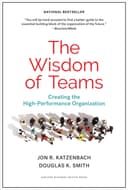 The Wisdom of Teams
Jon Katzenbach & Douglas Smith
Reinforced my belief that great teams are more than collections of talented individuals. Complementary skills, shared purpose, common goals, and mutual accountability turn individual capability into collective performance. The strength comes from how people work together, not simply from the talent of each person.
View on Amazon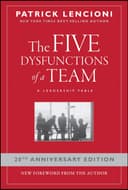 The Five Dysfunctions of a Team
Patrick Lencioni
Shaped how I think about trust and productive disagreement. Strong teams don't avoid conflict; they create enough trust to challenge ideas, surface concerns, and debate alternatives without making disagreement personal. Working through differences leads to stronger decisions and deeper commitment.
View on Amazon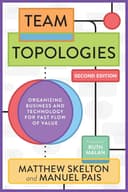 Team Topologies
Matthew Skelton & Manuel Pais
Influenced how I think about designing teams around the work. Team boundaries, ownership, cognitive load, and how teams interact all affect performance. There isn't one ideal structure—the goal is to create clear ownership while allowing expertise and collaboration to flow where the work requires it.
View on Amazon- Project Aristotle
Google Research
Reinforced that team effectiveness depends on more than individual talent. Google's research highlighted psychological safety, dependability, structure and clarity, meaning, and impact as important dynamics of effective teams. It strengthened my belief that leaders need to create the conditions where people can contribute fully, take interpersonal risks, and succeed together.
Foundational Research
Something I’ve Learned
Great teams don't happen by accident.
I've learned that great teams require intentional design. Who you bring together matters, but so do the conditions around them: complementary strengths, shared purpose, psychological safety, clear ownership, and the way the work itself is structured.
Psychological safety makes real collaboration possible. When people feel safe contributing what they know, challenging ideas, admitting mistakes, and building on one another's thinking, the team can generate ideas and solutions that no individual perspective would have produced alone.
Very little meaningful work happens in isolation. The best teams create something greater than the sum of their individual contributions—better ideas, more creative solutions, faster learning, and stronger outcomes. A leader's job is to intentionally create the conditions that allow that to happen.
Principle
Improve the System
Build systems that make better outcomes repeatable.
What I Believe
Organizations are systems. People, teams, processes, technology, architecture, incentives, and information all interact to produce outcomes. When something goes wrong, it is easy to focus on the person closest to the problem. Sometimes the person is the issue, but often the system around them is making success harder than it should be.
Good systems also have a shelf life. What works for one team, product, or stage of growth may fail at another. As scale, technology, customers, and complexity change, the systems around the work have to evolve with them. The goal isn't more process or structure—it's the simplest system that works for the context.
Improvement should focus on the outcome, not isolated efficiency. Making one part of a system faster does not help if another part remains the constraint. I want to understand the end-to-end flow of work, identify what is actually limiting performance, and focus improvement where it will change the outcome.
That requires visibility and fast feedback. Metrics, observability, customer input, delivery data, and financial results should help us understand how the system behaves, test assumptions, and learn quickly. Measurement should create insight and guide improvement—not become a tool for judging individuals.
I believe in continuous improvement. Make a change, study the result, learn from it, and adapt. There is no final operating model. The leader’s responsibility is to keep improving the environment around the work so people and teams can succeed as the context changes.
How I Put It Into Practice
Start With the System
When outcomes fall short, don't stop at the person closest to the problem. Trace the inputs and conditions around the work—goals, requirements, context, processes, tools, architecture, dependencies, skills, and incentives. Often the visible mistake is the result of something that happened earlier in the system.
Optimize for the Outcome
Improving one part of a system doesn't necessarily improve the result. Look end to end, understand what is actually limiting performance or is a bottleneck. Focus improvement there. Local efficiency only matters when it improves the overall outcome. In some cases, optimizing one part can actually make the system perform worse.
Make It Visible
You can't improve what you can't see. Use meaningful metrics, dashboards, observability, and qualitative feedback to understand flow, quality, reliability, customer impact, and business results. Measurement should create insight and guide decisions, not become surveillance.
Shorten the Feedback Loop
Feedback is how systems learn. Reduce the time between action and understanding its impact through small increments, automated testing, observability, frequent delivery, and customer feedback. Learn sooner so teams can correct course before small problems become large ones.
Evolve With Scale
Systems have to fit their scale. What works for 10 people may break at 100, while processes designed for 100 can unnecessarily burden a team of 10. Add structure as teams, products, and complexity grow, but resist complexity that isn't needed. Use the simplest system that works for the scale you're operating at.
Learn and Adapt
No system is ever finished. Experiment, study the results, learn from successes and failures, and continuously improve. Keep what works, change what doesn't, and challenge practices that no longer fit the people, product, technology, or business.
From Experience
Sometimes speeding up one part of the system makes the whole system slower.
At Wolters Kluwer, releases were taking too long. Software frequently entered the release process with behavioral or technical issues, and regression testing itself required significant time. The initial assumption was that Development needed to move faster, and there was pressure to add more development capacity.
When we studied the end-to-end flow, however, Development wasn't the constraint. QA and release verification were. Adding more developers would have simply created more work for an already constrained part of the system.
So we intentionally shifted development capacity toward improving the bottleneck. Developers added more unit testing, helped automate regression testing, and worked with QA earlier in the lifecycle. We also shortened the release cadence from monthly to biweekly, which reduced the amount of change being validated at once and gave us faster feedback.
The experience reinforced something that has stayed with me: improving the performance of one part of a system doesn't matter if the overall outcome doesn't improve. Sometimes the fastest way forward is to slow one part down so the whole system can move faster.
Ideas That Shaped My Thinking
 Thinking in Systems
Donella H. Meadows
Shaped how I think about organizations as interconnected systems rather than collections of isolated problems. Feedback loops, delays, leverage points, and unintended consequences reinforced the importance of understanding how the parts interact before trying to improve them. Lasting improvement comes from changing the system, not simply treating the visible symptom.
View on Amazon Out of the Crisis
W. Edwards Deming
Deeply influenced how I think about management's responsibility for the environment in which people work. Performance is often shaped by the system around people—processes, information, incentives, tools, and constraints. Deming also reinforced my belief in measurement as a tool for understanding, and in continuous learning and improvement rather than simply demanding better results.
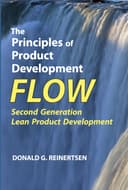 The Principles of Product Development Flow
Donald G. Reinertsen
Influenced how I think about flow, queues, batch size, feedback, and the economics of product development. Improving individual activities doesn't necessarily improve the overall outcome. The goal is to understand the end-to-end system, reduce delays and unnecessary work, and focus improvement where it meaningfully improves flow and business results.
View on Amazon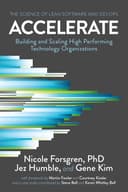 Accelerate
Nicole Forsgren, Jez Humble & Gene Kim
Reinforced these ideas with research from modern software organizations. Fast feedback, small changes, automation, continuous delivery, and strong technical practices can improve both delivery performance and stability. It helped shape my belief that speed and quality don't have to be opposing goals when the system is designed well.
View on Amazon
Something I’ve Learned
Look for the constraint, not the culprit.
I've learned that the place where a problem becomes visible is often not where it began. Before adding people, pushing teams to work faster, or fixing the obvious symptom, look at how work moves through the entire system. Follow the queues, handoffs, delays, failures, and rework until you understand what is actually limiting the outcome.
More work in progress rarely makes a constrained system faster. Smaller batches, earlier feedback, and building quality into the process help problems surface sooner and keep work flowing. Sometimes improving the whole system even means deliberately slowing one part of it down.
Most importantly, keep asking why. Treat problems as opportunities to learn about the system, not just events to resolve. The goal isn't to keep people busy; it's to create a system that consistently produces better outcomes.