Resources & Influences
Books, research, and ideas that have shaped how I think about leadership, engineering, organizations, and the world around me. I capture what I take from each so I can return to it later and share what has been useful.
Leadership & People
Understanding people, building trust, coaching, and developing leaders.
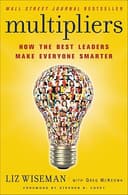
Multipliers
How the Best Leaders Make Everyone Smarter
Liz Wiseman
Why It Matters to Me
Reinforced my belief that leadership is less about having the answers and more about creating the conditions for others to think, grow, and take meaningful ownership.
Summary
Explores how leaders can either amplify or diminish the intelligence, capability, and contribution of the people around them.
Ideas I Carried Forward
- Ask questions before providing answers
- Give people meaningful ownership
- Create space for others to think and solve
- Challenge people beyond what they think they can do
- Use people's strengths rather than trying to make everyone the same
- Measure leadership by the capability you build in others
Where It Shows Up in My Work
This has shaped how I coach engineers and engineering managers. I try to coach before solving, give leaders real ownership instead of becoming the decision bottleneck, and use questions to help people develop their own judgment. As my organizations grew, this became increasingly important: my impact depended less on the problems I could solve myself and more on the capability and confidence I could build in others.
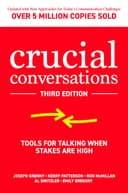
Crucial Conversations
Tools for Talking When Stakes are High
Joseph Grenny, Kerry Patterson, Ron McMillan, Al Switzler, Emily Gregory
Why It Matters to Me
Introduces important communication skills when the stakes are high.

Radical Candor
Be a Kick-Ass Boss Without Losing Your Humanity
Kim Scott
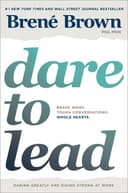
Dare to Lead
Brené Brown
Why It Matters to Me
Reinforced that helping people grow requires both courage and vulnerability. Leaders need to set clear expectations, give honest feedback, admit when they don't have the answer, and create an environment where people can do the same
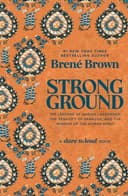
Strong Ground
The Lessons of Daring Leadership, the Tenacity of Paradox, and the Wisdom of the Human Spirit
Brene Brown
Why It Matters to Me
Reinforced my belief that leadership starts with managing yourself well. The ability to stay curious, regulate your reactions, communicate clearly, and remain open when certainty is unavailable creates the foundation for better decisions, stronger relationships, and more trustworthy leadership.
Summary
Explores how grounded leadership is built through self-awareness, emotional regulation, courage, curiosity, accountability, and the ability to remain open and effective in uncertainty.
Ideas I Carried Forward
- Resist the urge to reach for certainty where it does not exist
- Create space between stimulus and response
- Be clear rather than hiding behind politeness
- Hold yourself accountable for both your intentions and your impact
- Stay curious about why you might be wrong
- Use productive urgency to drive impact rather than activity
- Build grounded confidence through self-awareness, practice, and humility
Where It Shows Up in My Work
This shows up most in how I try to lead through ambiguity, conflict, and change. I work to pause before reacting, ask what I may be missing, and separate confidence from certainty. I also try to communicate expectations more directly, have difficult conversations sooner, and hold myself accountable for the impact of my decisions rather than relying only on good intentions. As a leader, I want to create urgency around outcomes without creating fear, and to remain steady enough that the people around me can focus on solving the problem rather than managing my reaction.
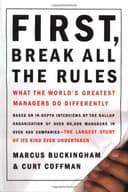
First Break All The Rules
Marcus Buckingham & Curt Coffman
Why It Matters to Me
Reinforced that great leadership isn't about treating everyone the same. People have different strengths, motivations, aspirations, and ways of working. My responsibility is to understand those differences, help people build on what they do best, and create opportunities where they can contribute, grow, and succeed.
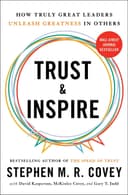
Trust & Inspire
Stephen M. R. Covey
Why It Matters to Me
Reinforced that trust has to be extended, not just earned. Leaders demonstrate trust by giving people real responsibility, autonomy, and the freedom to exercise judgment. Trusting people first creates the opportunity for them to rise to that trust.

Teams & Organizations
Building high-performing teams and healthy, adaptive organizations.
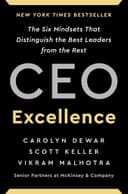
CEO Excellence
The Six Mindsets that Distinguish the Best Leaders from the Rest
Carolyn Dewar, Scott Keller, Vikram Malhotra
Why It Matters to Me
Strengthened how I think about leadership as an integrated system. Setting a clear direction is only the beginning; leaders also have to align people and resources, establish operating rhythms, develop other leaders, and create the conditions for disciplined execution.
Summary
Examines the practices of high-performing CEOs across setting direction, aligning organizations, mobilizing leaders, engaging stakeholders, and managing their own effectiveness.
Ideas I Carried Forward
- Create a clear north star that helps people make decisions
- Co-create direction because people support what they help build
- Allocate resources for the good of the whole, not individual teams
- Build an operating rhythm that connects strategy to execution
- Be explicit about standards while remaining kind to the person
- Spend leadership time on the things only you can do
- Define reality while giving people genuine reasons for hope
Where It Shows Up in My Work
This shows up in how I build engineering operating systems around clear priorities, regular leadership check-ins, metrics, release readiness, and explicit decision-making. As my organizations grew, I learned that I could not personally drive every outcome. My role increasingly became creating clarity, developing leaders, allocating attention and resources, and establishing the rhythms and standards that allowed teams to execute without depending on me for every decision.
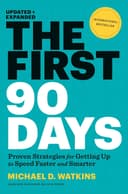
The First 90 Days
Proven Strategies for Getting Up to Speed Faster and Smarter
Michael Watkins
Why It Matters to Me
Reinforced the importance of learning before acting. Every organization has its own history, culture, strengths, and constraints, and effective leadership starts with understanding that context rather than arriving with predetermined answers.
Summary
A practical framework for navigating leadership transitions by accelerating learning, diagnosing the situation, building relationships, aligning the organization, and creating early momentum.
Ideas I Carried Forward
- Diagnose the situation before prescribing solutions
- Create a deliberate learning agenda for the first 30 days
- Ask consistent questions across stakeholders and look for patterns
- Adapt your leadership approach to the situation rather than importing an old playbook
- Clarify expectations with your leader early and revisit them often
- Build credibility through early wins that support longer-term goals
- Understand informal influence networks, not just the org chart
- Assess strategy, structure, processes, skills, and culture as an interconnected system
- Create explicit 30-, 60-, and 90-day milestones
Where It Shows Up in My Work
This shaped how I approach entering a new organization or taking responsibility for a new team. I start by learning: meeting with leaders, engineers, product partners, and other stakeholders; asking consistent questions; understanding how the organization reached its current state; and looking for patterns before deciding what should change. From there, I establish priorities, align expectations, identify a few meaningful early wins, and build a longer-term plan around what the organization actually needs rather than what worked somewhere else.
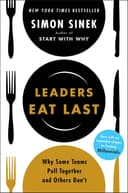
Leaders Eat Last
Why Some Teams Pull Together and Others Don't
Simon Sinek
Why It Matters to Me
Reinforced my belief that leadership starts with creating trust and safety. People do their best work when they know their leader has their back, treats them with respect, and puts the health of the team ahead of personal status.
Summary
Explores how trust, safety, and a sense of belonging shape strong organizations, and argues that leaders are responsible for creating environments where people can work together without protecting themselves from one another.
Ideas I Carried Forward
- Create an environment where people feel safe with one another
- Extend trust before expecting it in return
- Put the needs of the team ahead of leadership status or ego
- Treat people as people, not simply resources or output
- Build belonging through consistency, relationships, and shared purpose
- Accept responsibility for the environment in which the team operates
Where It Shows Up in My Work
This shows up in how I try to build relationships and trust with the people I lead. I want people to know that I will support them when things go wrong, give them room to make decisions and mistakes, and address problems without creating a culture of fear. I have found that teams become more accountable, collaborative, and willing to take risks when leaders extend trust first and consistently demonstrate that they have the team's back.
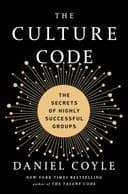
The Culture Code
Daniel Coyle
Why It Matters to Me
Helped shape how I think about culture as something leaders actively build through everyday behavior. Trust, vulnerability, clear purpose, and consistent signals about what matters create the environment where people can speak honestly, collaborate, and perform at a high level.
Summary
Examines how high-performing groups build strong cultures through three reinforcing behaviors: creating safety, sharing vulnerability, and establishing a clear sense of purpose.
Ideas I Carried Forward
- Build safety so people can speak honestly and take risks
- Go first with vulnerability to create trust
- Use small, consistent behaviors to reinforce belonging
- Overcommunicate priorities and purpose
- Make it safe to challenge ideas without lowering standards
- Use stories and shared experiences to reinforce what the team values
Where It Shows Up in My Work
This shows up in how I try to build teams where people can raise concerns, challenge decisions, admit mistakes, and ask for help without fear. I try to model vulnerability myself, listen before providing answers, and communicate priorities repeatedly rather than assuming they are understood. It also influences how I approach failures and retrospectives: problems are opportunities to learn together, not reasons to assign blame. The goal is a culture with both psychological safety and high standards.
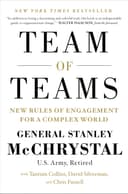
Team of Teams
Gen. Stanley McChrystal
Why It Matters to Me
New rules for complex, distributed organizations.
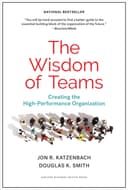
The Wisdom of Teams
Jon Katzenbach & Douglas Smith
Why It Matters to Me
Reinforced my belief that great teams are more than collections of talented individuals. Complementary skills, shared purpose, common goals, and mutual accountability turn individual capability into collective performance.
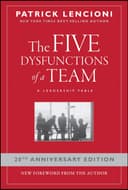
The Five Dysfunctions of a Team
Patrick Lencioni
Why It Matters to Me
Shaped how I think about trust and productive disagreement. Strong teams don't avoid conflict; they create enough trust to challenge ideas, surface concerns, and debate alternatives without making disagreement personal.
Psychology & Decision Making
How we think, judge, and decide — and where intuition leads us astray.
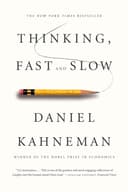
Thinking Fast, Thinking Slow
Daniel Kahneman
Why It Matters to Me
Deepened my awareness that good judgment requires more than intelligence or experience. We are all vulnerable to bias, overconfidence, and incomplete information, so better decisions often come from slowing down, seeking disconfirming evidence, and building processes that challenge our first instinct.
Summary
Explores how fast, intuitive thinking and slower, deliberate reasoning shape judgment, and how predictable cognitive biases can distort decisions even when we believe we are being rational.
Ideas I Carried Forward
- Know when intuition is useful and when to slow down
- Actively look for information that could prove you wrong
- Use the outside view and base rates when making plans
- Run pre-mortems to expose hidden risks before committing
- Watch for anchoring, loss aversion, and overconfidence
- Use decision processes and diverse perspectives to compensate for bias
Where It Shows Up in My Work
This shows up in how I approach planning, prioritization, architecture, and leadership decisions. I try to separate what feels obvious from what the evidence actually supports, ask what information may be missing, and invite perspectives that challenge my initial view. In larger decisions, I prefer explicit tradeoffs, risk reviews, pre-mortem thinking, and comparable historical data rather than relying only on confidence or intuition.
Systems & Improvement
Thinking in systems, constraints, and continuous improvement.
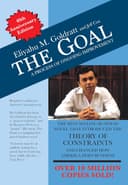
The Goal
A Process of Ongoing Improvement
Eliyahu M. Goldratt
Why It Matters to Me
A novel that taught me to find and exploit the system's constraint.
Out of the Crisis
W. Edwards Deming
Why It Matters to Me
Profound lessons on leadership, quality, and systems thinking.

Thinking in Systems
Donella H. Meadows
Why It Matters to Me
Shaped how I think about organizations as interconnected systems rather than collections of isolated problems — feedback loops, delays, leverage points, and unintended consequences.
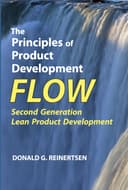
The Principles of Product Development Flow
Donald G. Reinertsen
Why It Matters to Me
Influenced how I think about flow, queues, batch size, feedback, and the economics of product development — improving individual activities doesn't necessarily improve the overall outcome.
Software & Engineering
Craft, practices, and principles for building great software.
Refactoring
Martin Fowler
Why It Matters to Me
Improving the design of existing code — a foundational skill.
Extreme Programming Explained
Kent Beck
Why It Matters to Me
Values and practices that shaped how I engineer.
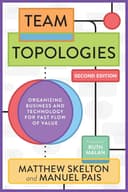
Team Topologies
Matthew Skelton & Manuel Pais
Why It Matters to Me
Influenced how I think about designing teams around the work. Team boundaries, ownership, cognitive load, and how teams interact all affect performance — there isn't one ideal structure.
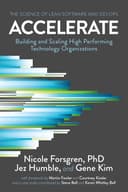
Accelerate
Nicole Forsgren, Jez Humble & Gene Kim
Why It Matters to Me
Reinforced these ideas with research from modern software organizations: fast feedback, small changes, automation, continuous delivery, and strong technical practices improve both delivery performance and stability.
Product & Business
Understanding customers, creating value, and scaling products and businesses.
Inspired
Marty Cagan
Why It Matters to Me
How to build products customers truly love.
The Lean Startup
Eric Ries
Why It Matters to Me
Build, measure, learn. Repeat.
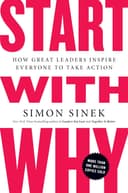
Start with Why
Simon Sinek
Why It Matters to Me
Reinforced that people need more than a list of things to do — they need to understand why the work matters. Connecting decisions and priorities to a meaningful purpose creates context and gives people something larger than the task itself to work toward.
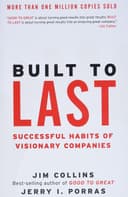
Built to Last
Jim Collins & Jerry Porras
Why It Matters to Me
The concept of BHAGs shaped how I think about ambition. A compelling future should stretch beyond what seems easily achievable today, giving people something meaningful to rally around.
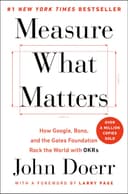
Measure What Matters
John Doerr
Why It Matters to Me
Helped shape how I translate ambition into execution. OKRs connect a larger purpose to clear, measurable outcomes, create alignment across teams, and make progress visible.
Research & Papers
Research and academic work that informs my thinking.

Trust in a Manager and Its Effect on Subordinate Performance
Mayer, Davis & Schoorman (1995)
Why It Matters to Me
Foundational research on organizational trust.
Self-Determination Theory
Deci & Ryan
Why It Matters to Me
Why autonomy, competence, and purpose drive motivation.
The Progress Principle
Teresa Amabile & Steven Kramer
Why It Matters to Me
Small wins build confidence and momentum — visible progress on meaningful work is one of the strongest motivators there is.
Project Aristotle
Google Research
Why It Matters to Me
Google's research on what makes teams effective: psychological safety, dependability, structure and clarity, meaning, and impact.
Fiction
Stories that entertain, inspire, and expand my imagination.
The Stand
Stephen King
11/22/63
Stephen King
The Institute
Stephen King
Biography & History
Remarkable lives and important moments in history.
Leonardo da Vinci
Walter Isaacson
Endurance
Alfred Lansing
The Splendid and the Vile
Erik Larson
Curiosity
Ideas outside my day-to-day work that challenge my assumptions and broaden how I see the world. Can include science, psychology, philosophy, music, and other interests.
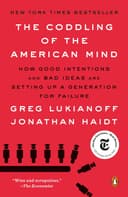
The Coddling of the American Mind
How Good Intentions and Bad Ideas Are Setting Up a Generation for Failure
Greg Lucianoff and Jonathan Haidt
Why It Matters to Me
Challenged me to think more carefully about the difference between safety and comfort. Growth often requires exposure to disagreement, failure, uncertainty, and ideas that challenge what we already believe.
Summary
Examines how overprotection, emotional reasoning, polarization, and the avoidance of difficult ideas can weaken resilience and productive disagreement, particularly in education and broader culture.
Ideas I Carried Forward
- Do not confuse discomfort with harm
- Prepare people to handle challenges rather than removing every challenge
- Treat feelings as important information, not unquestionable facts
- Seek serious viewpoints that challenge your own assumptions
- Build resilience through appropriate struggle and increasing independence
- Define groups by shared values and purpose rather than a common enemy
Where It Shows Up in My Work
This shows up in how I think about psychological safety, coaching, disagreement, and accountability. I want teams where people are safe to speak honestly and take reasonable risks, but not protected from every difficult conversation, challenge, or failure. I also try to invite opposing views before decisions are made and create an environment where disagreement is treated as a way to improve the thinking rather than as a threat to the relationship.